On dressing to feel present again
Fashion has always had a complicated relationship with the waist, oscillating between defining it, hiding it, corseting it, liberating it, and then starting over. Much could be read into how society defines femininity through the presence or absence of an hourglass figure. If we were to dive elbows-deep into the societal shifts underway, alongside the cinching and the hiding, there would probably be a lot to uncover.
Right now, however, we are in a defining moment. After years of oversized everything, the silhouette is getting pulled in.
The runways have been making this argument for a couple of seasons. Alaïa, always the most honest about the body, brought our gaze to the waist in almost every look. Loewe sent out corseted jackets, and Valentino stunned with the simplicity of a belted coat.
Since fashion is rarely isolated from the wider cultural mood, the state of the world is reflected in how we dress, on a subliminal autopilot. After years dominated by uncertainty, overstimulation and generic exhaustion (or what we now refer to as the post-pandemic era), the return of the waist simply makes emotional sense. The 2020 – 2023 fashion silhouette was aggressively anti-body, and aesthetics were built around appearing accidentally dressed. We dressed in oversized everything as a form of escapism and a reaction to the greater turmoil. The comfort of having the option to hide from the outside world felt like a cushioning antidote to external stressors, and hide we did. If your post-pandemic closet contains elevated activewear paired with XXL-sized blazers, you might now nod in unison as you read this.
Simultaneously, since we live in an attention economy, hyper-feminine dressing pulled us toward the other extreme, and a woman’s silhouette became lucrative content. We saw a rise in extreme bodycons, short stints of hyperpromotion of corsets, and a whole Bermuda triangle of female creators discussing the relationship between seductive dressing and marital success rates.
Eventually, the extremes became exhausting.
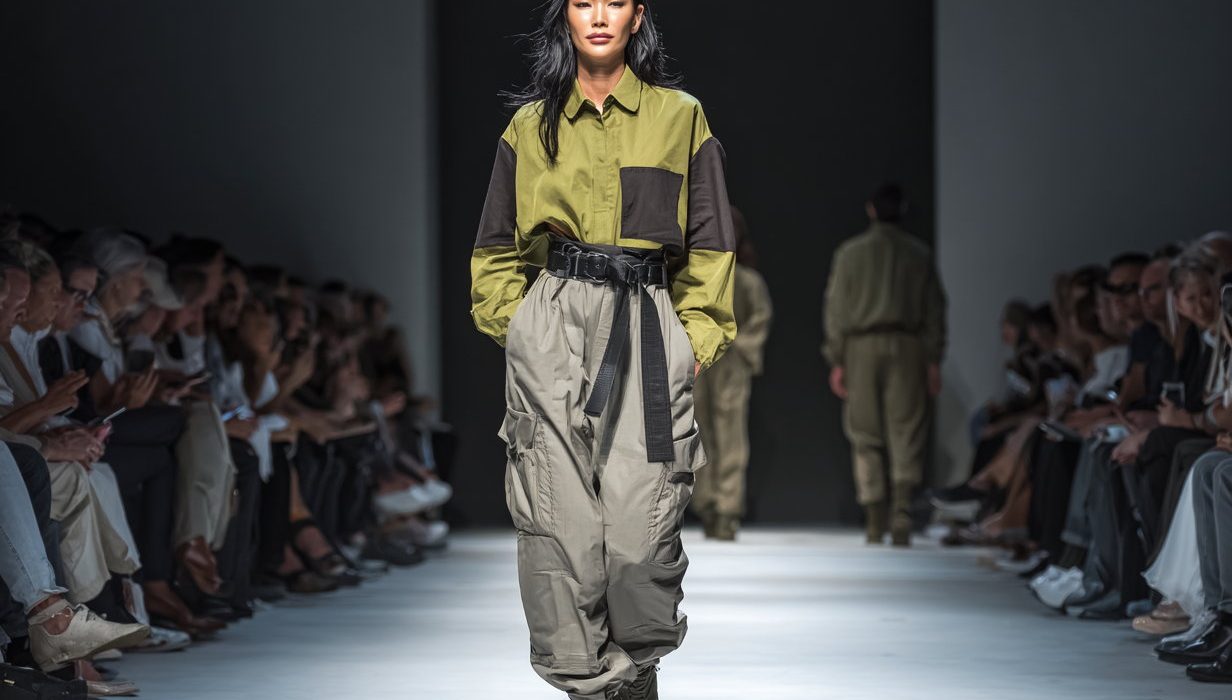
The opening look from Isabel Marant set the tone: a patched overshirt was worn over cargo trousers, cinched with a double belt. Throughout the collection, scarves were knotted at the waist and draped dresses tied into stylistically witty knots. Simone Rocha showed a chartreuse-green gown with an exaggerated hourglass silhouette. Ferragamo, Chloé, and Dior all played with tie waists as a key styling accent across SS26.
In the Gulf, this movement reads differently than it does elsewhere. Women here have always known how to work with proportion, a wide belt over an abaya, a gathered sash that marks the torso without exposing it – the waist as a style tool is not new here. What’s new is that it’s being reflected in international collections, finally catching up to what regional dressing has understood for a long time.
The waist is back not because fashion decided women should look a certain way, but because women decided they wanted to. After years of dressing either to disappear or to perform, women want clothes that allow them to feel present again, and the runways are reflecting exactly that.
The return of the waist is not about an isolated trend, a garment, or an aesthetic. It’s about the psychological return of women dressing on women’s terms.